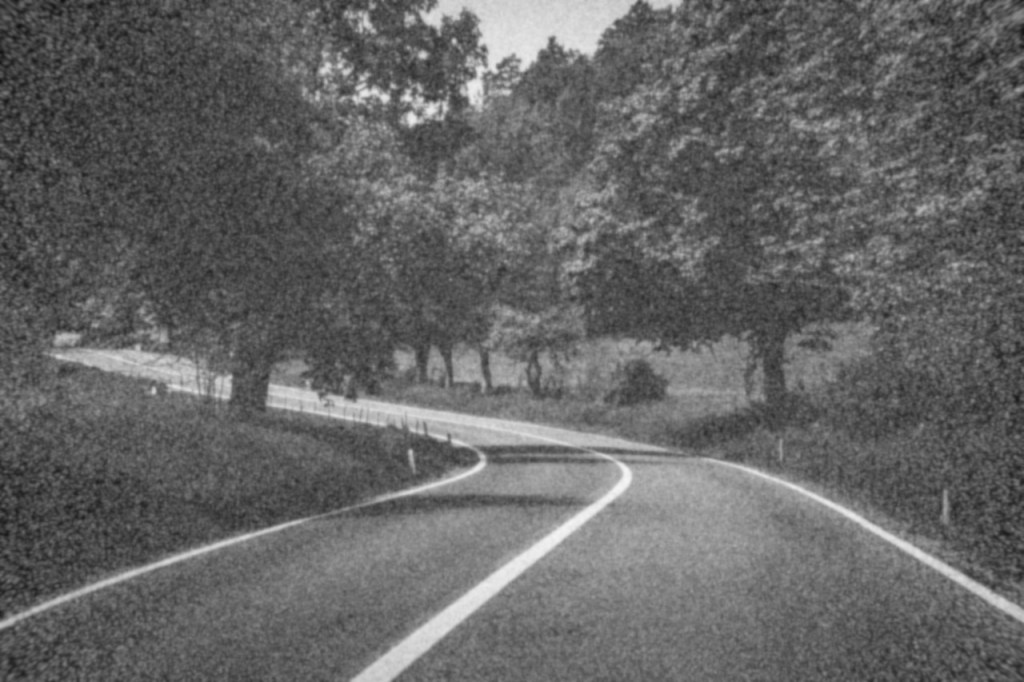
Picture credit: MolnarSzabolcsErdely on Pixabay
I-65, North, Alabama. 1993
“Picture, if you will, Interstate 65 in Alabama. It is a ribbon of seemingly unending asphalt that cuts through mountains that have seen more history than most nations. It is a highway where exits begin to blur together in the dark for any driver not in their right mind, a place where drivers measure their lives in mile markers and empty coffee cups.
“Tonight, we sit in the passenger seat of an old sedan belonging to one Brian Miller, a man with little left to live for after the events of the last 24 hours. He’s 34 years old, driving home from a hospital where hope finally ran out. He’s spent three weeks sleeping in hospital chairs, six months watching treatments fail, and a lifetime learning that luck is something that happens to other people. Between here and what’s left of his home lies only an uncaring road, his own grief, and the question of what comes next. But for some people, like Mr. Miller, who have lost the last thing tethering them to the world, an exit sometimes makes itself known. A place known as Exit 90, a place where lost things gather for one last goodbye.
“Tonight, Mr. Miller is going to take an exit into the unknown. He’s going to attempt, as others have, to find solace in Exit 90’s Rest Area. The first, and only, Rest Area in… The Southern Fringe.”
Brian Miller drove, fleeing the past.
He couldn’t remember how long he’d been driving. As he took notice of his surroundings, he vaguely recalled seeing signs for Montgomery, Huntsville, Nashville, Ash Hollow. But the number of miles to each city were a blur in his memory, taken by highway hypnosis just like everything else had been taken from him. He didn’t try too hard to recall the numbers. They, like everything else, no longer mattered now that he’d finally lost the last bit of hope he’d been clinging to.
Brian had always been an unlucky man. Since the day he was born, it seemed like more things worked against him than with him, and when he became an adult that bad luck just kept compounding. Every job he’d landed, he’d struck out on, almost always due to things far outside of his control‒ downsizing a month after he got hired, a big merger with another company that happened to have three people who were already doing his job, the CEO getting arrested and liquidating the office. Sarah used to joke he could find a banana peel to slip on in the desert.
Used to joke.
Because she couldn’t joke. Not anymore.
Six months of hoping. Treatments that turned into nausea and hair loss and medical bills they had no chance of repaying on time. Three weeks of sleeping in ICU waiting rooms and watching her get weaker every day as he scrounged for enough change to eat hospital food and vending machine garbage. All of those nights, all of that hope, leading up to where he was now‒ driving up I-65 at 5:45 PM, blinking tears from his eyes, hours away from home because he insisted she have the best doctors and care, all for nothing.
The long straight road stretched far ahead of him, the only changes being the hills that sent his stomach rolling and the occasional highway sign glowing in his headlights and passing by before his eyes could register what they said. He guessed he was somewhere between Montgomery and Huntsville by now, but he couldn’t be sure. There were no landmarks, so he had to be in one of the many no-man’s land zones along I-65 where, if you didn’t take the chance to stop at the last exit you passed, you wouldn’t be getting off the interstate again for at least an hour.
He squinted to look into the distance, desperate for any sign of civilization that might tell him where he was. All he could see was the sky stuck in the orange-purple phase of twilight, and the mountains that had become gray and black giants curled in sleep underneath it.
He could feel fatigue creeping in when he started to notice a few blinks lasted longer than they should have. A little vignette darkening the edges of his vision. His hands felt numb on the wheel. The lane lines blurred.
He came to when the rumble strips began screaming under his tires. Somebody honked. He’d drifted onto the pullover lane during that last “blink” and nearly careened through the guard rails. He pulled the wheel back to the left and shook his head violently. Focus, he told himself.
He saw the sign when he looked up from the wheel. Reflective white letters against a green backdrop. “EXIT 90. REST AREA.”
Perfect. A chance to stretch, pee, call Mrs. Chance next door and ask her if Mittens is alright. His stomach grumbled, reminding him he hadn’t had anything other than that cardboard-crusted pizza at the hospital yesterday. Maybe get a pack of those mini donuts from a vending machine or something. Maybe they’ve got some coffee too.
The pink and orange and purple sky was bleeding into an inky night as he pulled off the interstate. Another car behind him honked its horn. He must have pulled off a bit more violently than he thought. Guess I really did need a chance to stop. Images of a quick, but restful pit stop filled his mind as he slowed to a crawling speed in the car. As he drove, trees quickly separated him from seeing the interstate until tall pines stretched into the sky. The only bit of twilight he could see was now directly in front of him.
The thin, one-laned access road wound deeply into the woods. Long and winding, with the trees pressing closer and closer until there was barely any green grass between the road and the treeline. A few times he winced, thinking his side mirror would shatter as it met a tree trunk, but thankfully the impact never came. For five minutes he drove, wondering if he had fallen asleep at the wheel and this was all a dream before he actually did go driving to his death.
But the road kept going, and as he took another winding curve deeper along the access road, he saw a sign: “REST AREA 2 MILES. REST YOUR WEARY BONES.”
The next curve came faster than he expected, even going as slow as he was, he had to turn the wheel sharply, with another sign nearly overwhelmed by the trees: “YOU’VE COME SO FAR.”
Brian’s hands tightened on the wheel when he saw another one just a few feet behind the last: “FIND WHAT YOU’RE LOOKING FOR.”
His headlights barely caught the next as he took a sharp left: “ONE LAST CHANCE.”
His odometer was still ticking, still saying he had only traveled for nearly two miles despite the amount of time he’d spent driving. A few winding curves later, he saw the final sign: “ALL TRAVELERS MUST STOP.”
The road curved one more time, and the treeline to his right broke open.
The rest area sat in a cleared space of concrete claimed from the woods around it. A single-story building with the same gray concrete walls and brown roof he’d found at every other rest stop along the South was at its center atop a small hill. A concrete walking path connected the parking area to the building itself, and a separate gable-roofed walkway led somewhere towards the back that he couldn’t see.
There was no parking for semi-trucks, only diagonal spacing for regular cars. Brian pulled into the first one and took a moment to breathe. His knuckles were white, still locked to the steering wheel.
Hallucinations. Brian rationalized as his mind kept replaying the signs. Doc said there’d probably be some till the grief passed. Just my mind playing tricks on me. Especially without sleep. Especially after… he thought, trying to place the last time he had actually slept. It had been at least 30 hours ago. Time had gotten slippery somewhere around the 20 hour mark, back when her breathing had changed and the nurses started preparing for the worst.
The signs weren’t real, he told himself. Or, they were real, but the words got changed in your head. It’s just exhaustion and grief mixing together. You’re almost home. Get out and wake up, then we can get home and sleep.
Killing the engine and opening the door in the same motion, he pushed himself out of the car seat and looked around. The silence hit him immediately. No highway noise at all. No engines, no wind, no roar of tires upon asphalt. It was the holidays, closer to Christmas than he cared to think about, and people had been crowding the interstate when he’d taken the exit. But he couldn’t hear a sound through the trees. As he thought about it, he didn’t even hear any birds even though the place was packed with pine trees.
It was like he was completely alone in the world.
The second thing he noticed was the handful of other cars in the parking spots. He saw a newer pickup truck, one of the F models he really wanted but couldn’t justify trading in his car for, covered in road dust and a bunch of old pine needles. Just behind him was an older sedan from the 40s or 50s, painted in rust and with a completely flat tire. Next to it was something from the 60s he couldn’t identify, so far gone as it was. Somebody’s custom-painted van with a sun-bleached mural of Sidhe Groove Collective splashed on the side.
All of them looked like they hadn’t been touched in months, if not decades in some cases.
“Knowing my luck, those signs were probably telling me the place was closed,” Brian mumbled with a small laugh. His words echoed off the trees and brought his voice back a few seconds later. The sound sent shivers down his spine. He closed the door and left the parking spaces.
Three vending machines stood under a small overhang just before the gable-roof began, nestled in an alcoved nook. The fluorescent light flickered above them in an annoying way that hurt to look at for too long. Two of them had signs plastered to them saying they were “OUT OF ORDER” in bold, hastily written marker. The middle one was lit up on the inside, humming, but he couldn’t see what snacks were inside because its glass was scratched to the point it looked like it was frosted. It looked like somebody had taken steel wool to it, or a herd of angry cats had decided to use it as a scratching post.
“Man, screw this,” Brian said. He’d get back on the interstate and find a Burger Lord at another exit he could stop and rest at. He marched back to the car, threw the door open and angrily turned the key.
Nothing.
No click of the starter. No whine of electricity. The dash lights didn’t even come on.
“No,” he pleaded with a groan that turned into a growl. “No no NO!” He slammed his hand on the dash, the radio, the steering wheel, anger and frustration growing with each drumbeat. He tried the key again, and again. Five, then ten times, each time turning the key so hard his fingers hurt. Still, he got nothing.
Brian threw open the door and stood in the parking lot, trying to calm his breathing. “Okay, okay,” he panted. “It’s fixable, it’s gotta be. Get a payphone, call Mrs. Chance, call a tow truck or something.”
He marched past the vending machines and headed towards the main building. To his right, along the extra gable-roofed walkway led to a large covered picnic area with moss-encrusted tables. He kept walking, trying not to focus on how his eyes kept wanting to look at the woods surrounding the rest stop. “Just your eyes playing tricks on you, man,” he rationalized. There was no way he saw something in there, it was just getting dark, and the dark liked to play tricks.
The interior was dim, badly lit by a few more fluorescent tubes that seemed to have blown out in more than a few places, casting everything in a pale, almost-green white light. The smell of mildew and rust invaded his nostrils the second he crossed the threshold, with something organic underneath it like rot or old standing water.
“Hello?” he called, his echoing voice the only response he got.
The entrance had the standard rest area layout: a welcome desk, which sat empty; a hallway with a sign saying it led to the bathrooms and payphones; and another hallway to the left of the desk for employees only. Underneath the welcome desk was a collection of tourist guides. They were mostly illegible, but he saw a few for Dixie Stampede, The USS Alabama, Vulcan Park, he even saw one for Ash Hollow. Mixed in with the more popular destinations he saw other handouts for lesser known attractions like Ave Maria Grotto and something called The Bell-Witch Cave. But there were other, stranger ads that set his teeth to grinding: one for Care-Always Hospital with its blue star on display, sending him into a vision of the past six months; The Henderson Quarry where they would go swim every year as kids; The church which had given him the happiest and least unlucky day of his life.
He took a glance, and nearly jumped out of his skin when he saw the wall on the right had a faithful, enlarged recreation of the “Go to church, or The Devil will get you!” sign from outside Montgomery painted on it in paint that had once been red but faded to a peeling brown.
He carefully went down the hallway to his right. The doors to the mens and womens rooms were propped open, their tile floors coated in a film of grime and their sinks looking like they would be rusted shut.
“There is no way this place is still open,” he grunted. “But it’s got power, maybe I can get a phone call out before the whole place falls apart.”
Two rotary payphones sat at the end of the hallway mounted to the wall. Both looked ancient. Rust or some other brown-red liquid bled down from the spots where ceiling met wall in long streaks that looked disturbingly organic.
Brian walked to the phone on the left, his feet sticking to the linoleum with each step. He lifted the receiver and held it to his ear. All he got was silence, not even a dial tone. He rolled his eyes and hoped beyond hope that some money would fix it. He had to wipe rust off of the coin slot as he dug in his pocket for a couple of quarters, leaving a brown-orange stain on his thumb. He fed the machine the quarters and dialed for the operator, but still got nothing. He tried pressing the two button four times, and the button stuck into the machine on the last click. Probably corroded to hell, Brian thought and went to hang up. But just as he was about to replace the receiver in its cradle, a hiss of static told him the line had connected.
“Oh thank God,” he cried out and brought the receiver back to his ear. “Operator, listen I don’t know how long I got before this thing cuts off. I’m stuck at Exit 90’s Rest Area along I-65. Can you connect me to a tow truck around here, please?”
The hissing static continued unbidden, and his hope deflated as quickly as it had grown. Then, he heard a voice growing in volume until it drove back the hissing.
“Brian?”
His hand froze. The phone felt hot in his hand. His heart pounded so hard in his chest he could feel it in his throat.
The voice called as if the woman were speaking from down a long tunnel. “Brian, are you there baby?” She sounded strong and healthy again.
“Who is this?” his voice cracked.
“It’s me, silly,” she said with a breathy laugh, the one she always used when she knew he was being stupid on purpose. “Sarah.”
The welcome building tilted. His breath caught, eyes flooding uncontrollably. This was impossible. It had to be‒
Nightmare, his brain told him as an unquestionable fact. Just a nightmare, all it is. You’re still in Care-Always. Still in the chair. She’s still alivealivealivealive.
He pinched his arm tight and twisted the skin hard enough to make him cry out loud. The pain was sharp, bright and most horribly real. He was still in the rest area. Still holding a phone that shouldn’t be working. Hearing a dead woman’s voice.
“Sarah’s dead,” he said. The words felt like coughing glass from his throat.
“I know you’re scared, baby,” she sounded sad, sympathetic. “But listen, this is our last chance for a while. I ain’t going anywhere, I’ll be here when you make it. But listen to me, baby. You’ve gotta take care of yourself. You need to‒”
Brian didn’t hear the rest as he slammed the phone down into the cradle hard enough for the bell to ring. He backed away from it, noticing his breath was coming out in hard quick pants that made his head hurt. He didn’t take his eyes off of the phone as he backed away, as if it might leap from the wall and attack him.
Impossible. There was no other word for it. This was impossible. She was dead. He’d watched her die. He’d signed the papers, she was on her way to the funeral home, on her way to be buried in the family plot.
“Hello?” He shouted, his voice filling with anger now, but he didn’t care how angry he sounded. Anger was better and easier than any of the other emotions threatening to break through. “HELLO?” he bellowed this time at the top of his lungs, rubbing his throat raw.
He marched past the welcome desk, past the faded tourist guides, and down the short hallway labelled EMPLOYEES ONLY. The door halfway through the hallway was closed, but he could see a light glowing from the crack between it and the floor. A sickly yellow light that pulsated like somebody’s breathing.
He banged on the door with his fist. “Hey! Open up! This your idea of a prank? Imitating dead people on the phone?”
When he tired of his assault on the door, he stepped back, waiting and listening for some sign that somebody was on the other side.
Then the screaming started.
Brian fell back and clutched his hands to cover his ears. It wasn’t just one voice, it was dozens, hundreds of them wailing in a cacophony of pain. Screaming, begging, the sounds of pure agony, the sound of every victim of Hell singing in a tortured choir layered on top of each other until it was just a wall of noise. And underneath it, rhythmic and horrible, was the rapid beating of an army of hospital heart monitors all flatlining in sequence.
Beepbeepbeep beeeeeeee
Beepbeepbeep beeeeeeee
Beepbeepbeep beeeeeeee
The door buckled as something on the other side rammed against it, popping a few screws loose.
Brian ran without thinking, without grace. He scrambled on the floor like a frightened toddler for a few feet, then threw himself to his feet and ran faster than he’d ran since high school. This was pure animal flight response telling him to get through the hallway, out of the double doors, into the parking lot and into his car that wouldn’t start but at least could be locked and be a safe shelter from whatever the hell he’d just witnessed.
He threw the double doors open and fled into the parking area, his feet pounding against the concrete as he ran to find shelter in the lights by the picnic area.
He could still hear the screaming as he stopped to catch his breath. It was muffled now by distance and walls, but if he focused, it was there. He decided not to focus, to try drowning out the sound with literally anything else.
Air filled his lungs. It was cold and stung his lungs, but it was also fresh and not tinged with whatever disgusting wrongness was present in the building. Okay, okay. Think man, c’mon. He couldn’t stay in the building, that much was clear. Whatever was going on in there, he wanted no part of it.
Walking was just as much out of the question. The access road was supposedly two impossibly long miles of driving, on foot would be suicide. Besides, something told him if he tried walking, he’d never find his way back to the interstate.
With nowhere else to go, he went for the most lit up area, the roofed picnic tables. There were four of them, crusted with moss but otherwise in good condition, better than anything else in the whole place. As soon as he entered the circle of sodium light that filled the pavilion, he felt his worries, his fears, lighten. They weren’t gone, but he felt like as long as he was in the light, then nothing could bother him.
Committed to staying within the haven of light, Brian took stock of his surroundings. The concrete tables overlooked a small hill with old charcoal grills cemented into the ground dotting the area. Next to each grill was a lightpost that created little umbrellas of light, and it was then that Brian realized that the entire rest area was surrounded by those same lights. Not a single inch of grass between the woods and the rest area was left in the dark. Even the entrance and exit was guarded by two lights on each side, creating what was effectively a sheepfold of light. About ten feet from the circles of light was the treeline, and the same sticky brown-red liquid that was leaking from the ceiling of the welcome center was joined by a handful of sickly green tendrils like tree roots snaking across the ground from the dark undergrowth. He squinted and waited, trying to let his eyes adjust to the world outside of the light, and as everything came into clarity, a wave of fresh horror washed over him.
Something was stalking through the woods.
It moved on four limbs, but if it was two arms and two legs or just four legs, Brian couldn’t tell. It was big, even hunched in the middle it was bigger than a human. The head looked human, but that was all he could see from so far away, and he had no desire to get any closer. The thing was thin, so thin he could see a sunken stomach underneath ribs, and it moved with the same hunger he’d seen on nature documentaries of wolves starving in the wild. The longer he looked at it, the more his brain refused to focus on it, any attempts to mentally hold onto a picture of the thing slid off like water gliding on glass. But it was moving parallel to the picnic area, pacing back and forth like something prowling the perimeter of a cage.
Brian took a step back, slamming his heel into the concrete table with a painful thunk. The thing stopped, as if it had been frozen midstep, its head now directly facing him. He could feel its attention on him like a pressure just behind his eyes, a sort of attention that made the hairs on his body stand on edge. He took another step back, and the thing shifted just barely, a twitch of muscles repositioning. Then, it seemed to remember a task it was assigned, and went back to prowling the treeline, always within his sight, pacing back and forth, biding its time.
The one saving grace was that it seemed incapable of leaving the woods. It refused to come closer than the last handful of trees, rushing forward randomly, but stopping on its heels with an audible crunching noise that twisted Brian’s stomach.
Okay, focus man, focus. Real or not, you’ve seen Total Recall. If it’s a dream, just gotta find a way out since waking up isn’t an option. If it’s reall… Well, he’d rather not think about the implications if this was real.
As nerve-racking an idea as it was to let the thing out of his sight, he knew he was exposed, and if the thing found a way to break through the light, he’d be a sitting duck. At least if he was near the car, he could lock the doors and hope he’d survive. He took a few backwards steps, watching the thing follow his movements, and turned to quickly walk back to the car. He knew better than to jog or run, lest he trigger some kind of hunting instinct.
Leaving the gabled roof, he deliberately shifted his mind from thinking about how despite the fact he’d been at the rest area for nearly an hour, the sky was still the same shade of twilight it had been when he arrived.
So, he sat on the hood of his car and waited. For what, he didn’t know. Morning, maybe. A tow truck that would never come, a fellow traveler, divine intervention, or anything else that might rescue him. As he waited, he tried the car twice, hoping that something would change, and got the same results as the first time. He tried yelling for help, but his shouts were simply swallowed by the trees. He even, in a desperate moment, tried walking towards the access road, but that venture ended as soon as he saw the thing within the woods following him, as close tot he treeline as it could get, its shadowy limbs reaching out into the empty dark air, waiting for him to cross the threshold of lights.
So he sat. And waited. And tried not to think of Sarah, or her voice on the payphone, or what had been behind the employee room, or what was stalking in the woods. He didn’t do a very good job. Time passed, perhaps. His watch told him it was the same time as when he’d entered the rest area, but he knew that was impossible from his growing hunger. The thirst he was handling thanks to an old bottle of water he’d found in the passenger door, but the harsh cramps and grumbling in his stomach were eager to remind him how long it had been since he’d last fueled himself.
Just a few steps away, the vending machine hummed. But he was afraid of it, everything else here had been wrong. What would happen if the machine spit out acid or something? He fumbled in his pockets, taking out a fistful of quarters and thought. Finally, hunger won out. Just one, he told himself. If it’s something weird, then we’ll…we’ll figure it out. He leaned off the car, legs burning from sitting so long, and went to the machine. The glass was so horribly scratched he couldn’t see what was in there other than vague shapes, which at least told him it was stocked.
Unlike everything else in the rest area, though, the machine was spotless, save its glass. “This is so, so stupid,” Brian muttered as he put two quarters in the machine. The machine clicked and whirred, the wonderful sound of a machine that worked, one that followed the rules of normality. He pressed C3, the most middle option on the board, and waited, expecting the machine to break or eat his quarters or come to life and try to kill him.
Something hit the bottom of the retrieval bin with a heavy thunk.
Brian bent down and reached inside, with his left hand, just in case it was eaten.
His fingers closed around something hard and plastic. Confused, he pulled it out.
It was a keychain of a plastic green football helmet, the kind they sell at gas stations as cheap souvenirs for travellers. He’d bought one extremely similar to this on a road trip to Wisconsin in college and lost it later that same day, after writing his initials on the bottom. He laughed at the coincidence, until he turned it over and dropped the thing like it was boiling hot. His initials, in his handwriting, in the same purple marker he’d used that day, stared at him from the bottom of the helmet.
“It’s a trick, man, it has to be. Somebody, the CIA, somebody went through my stuff, planted it here to screw with me.”
You know that’s not it, his brain told him. You never told anyone about that keychain. You barely remembered it yourself until just now. Nobody else who’s alive now knew about that keychain.
He stared at the vending machine, at those glowing buttons and scratched glass. What else is in there?
He fed it all of the quarters he had and pressed another combination. “Thunk!” A teddy bear, brown, with some stuffing missing. He’d lost this when he was about five, and could remember his mother tearing the house apart, but never found it. Now it was here, in his hands once again.
Another.
“Thunk!”
A class ring he’d lost at a party in college.
Another.
“Thunk!”
The mix tape from his first car, the one he’d thrown out the window crossing over a river.
He was pressing buttons faster than the machine could keep up, a small mountain of things gathering in the slot. Decades of lost things grouped in his hands. A pocketknife, a library card, a photo of his grandmother, a lighter, a matchbook. Each one impossible, each one lost, each one real.
He pressed another button, but had run out of money banked in the machine. He ran to his car and grabbed all the change in the cupholder he could fit in his hands. He darted back, nearly tripping over the uneven concrete, and fed it again.
“Thunk!”
A hospital bracelet.
It was a simple thing, made of white plastic with black words. MILLER, SARAH, J. CARE-ALWAYS HOSPITAL. His breath came ragged, choking on spit and bile threatening to evict itself from his body. He’d held onto this bracelet as they took her wedding ring off and gave him the few personal effects she’d come into the hospital with. Why was it here?
“No,” he choked. “No, nonono.”
He pressed another button. He had to see. Had to. There was no other option anymore.
“Thunk!”
A little stuffed rabbit made of patchwork quilt fabric. He’d bought it in the hospital gift shop, and Sarah had kept it with her on her bedside, holding it close during the worst nights. She’d asked him to keep it after she was gone. But he’d left it behind, because he couldn’t even bear to look at it. He’d asked the nurses to take it, to donate it to a kid that needed some comfort.
And the machine had taken it. From the hospital, from the donation bin or the pediatric ward or wherever it had ended up after he’d abandoned it. After he’d let it go. And the machine had given it back.
Brian’s roar ripped itself from his chest before he could think. “GIVE HER BACK!” He slammed his fists against the scratched glass, over and over again until he felt fire in his knuckles. The glass cracked, spiderwebbing from the bloody point of his last attack. Something primal took over. He ran to his car, threw open the trunk, and grabbed the tire iron from the emergency kit. He ran back, throwing his arms back in a two-handed swing.
“GIVE HER BACK!” he shouted with a swing. The glass broke further. Another swing, and it shattered, sending shards flying in a thousand little prisms. He swung again, and again, and again. The metal frame dented, the internal machinery sparked violently, the corkscrew dispensers bending under his assault.
His hands were bleeding, but he didn’t care. He kept screaming, kept swinging, in a wordless rage of grief and anguish. Three weeks of watching her die, six months of hoping beyond hope, and 34 years of being unlucky pouring out through the tire iron and into the machine that had dared to offer him memories of her when it couldn’t give him her. His her. The only her that ever mattered.
The lights flickered inside and died in one last spark of defiance. The humming stopped. Brian stood over it, tire iron still raised, surrounded by broken glass and scattered debris of lost things. His ears rang in the sudden silence.
Then, a car engine turned over behind him. His engine turning over. His headlights blazed to life, cutting through the dark of twilight. The engine hummed, smooth, healthy and alive once again.
Brian dropped the tire iron, scooped up the items, and staggered towards the door. He fell into the seat, his hands shaking so badly he could barely grip the wheel. The dash lights were on. The radio crackled to life in a barrage of static, leading into a commercial for the Piggly Wiggly.
He looked into the passenger seat, at the pile of things he’d gotten back from the machine. He took a deep breath and put the gear in reverse, then sped out of the rest area at breakneck speed. In the rearview, he caught a glimpse of the thing in the treeline moving like a crawling shadow, trying to dart through the woods to catch up to the car. He drove fast, too fast to be completely safe, but he didn’t care. There was no way he was letting his foot off the gas pedal until he made it back to civilization.
He heard the wind before he saw the cars. Headlight, dozens of them flying through the trees to his left as the service road became an on-ramp. He pulled over to his left, forcing a couple of cars to honk and squeal their tires as they made room for him, and breathed a sigh of relief.
Half a mile later, Brian glanced in the rearview mirror, and saw that the on-ramp for Exit 90 had disappeared.
It was like it had never existed.
But it had existed.
The things in his passenger seat were proof enough of that.
He kept driving.
“Mr. Miller left Exit 90 with more than he came in with. Objects that shouldn’t have found their way back to him, and proof that somewhere in the space between life and death the things and people we mourn are waiting. But he also left some things behind: the idea that grief has a stopping point, and the idea he made any real difference.
“Exit 90 still calls to those it seeks to reconnect with the past. The vending machine still hums under sodium lights, waiting for its next customer. Brian Miller learned that some things, once they are lost, should stay lost, because holding them again also means holding all of the grief that came with losing them.
“Exit 90. The Lost and Found. Just another place that calls itself home…in The Southern Fringe.”
P.R.I.M.E. Paranatural Object Report:
Paranatural Object 2065: “The Vending Machine”
Report compiled May 23, 2007
Physical Description:
The Vending Machine is an Automatic Products LCM1 model designed to dispense food.
The glass front is severely damaged, rendering contents invisible to outside observation. Attempts to record the inside using snake cameras and other such technology have resulted in failure.
The machine is operational despite the lack of a power cable or power supply of any kind.
2 identical units flank The Vending Machine, but both seem to be permanently out of order.
History:
According to the testimony from interviews conducted and obtained therapy records, The Vending Machine was first discovered in 1986 by a civilian named Edward Mordol during routine travel following a funeral.
Prior to this, scattered reports of “phantom rest areas” along the Alabama region of Interstate 65 date back to the interstate’s first opening to the public. This has led the P.O. Theoretics Department (P.O.T.D.) to the theory that The Vending Machine may have taken different forms prior to the creation of the LCM model in 1985, adapting its form to contemporary forms. Previous manifestations remain unknown.
Paranatural Properties and Behavior:
- The Vending Machine dispenses objects the subject perceives as “lost.” The definition of which seems to be vague, and tied to the user’s emotional state rather than any defined rules.
- The objects dispensed from the machine are not replicas or reconstructions. Extensive testing has proven them to be genuine articles.
- A Paranatural Object has never been known to have been dispensed from the vending machine. The objects it returns are mundane objects, and no evidence of them being Secondary Contact Objects has been detected.
- The Vending Machine accepts U.S. currency, but where the money goes after insertion is unknown.
- As stated, the machine functions without external power
- The machine cannot be removed from Exit 90. All attempts to transport the vending machine have failed. When the vending machine leaves the boundary of Exit 90, it becomes a normal vending machine, empty of all objects.
P.S.- Relationship to Exit 90:
The Vending Machine was initially theorized to be the anchor point of Exit 90’s pocket dimension within [REDACTED]. Testing disproved this. The Vending Machine is a component of Exit 90’s Rest Area, not its source. Current theory: The Vending Machine adapted to serve Exit 90’s purpose, not the reverse.
Paranatural Object Event Report:
Paranatural Object Event 1865: “Exit 90 and Rest Area[1]”
Classification: Class III
Status: Ongoing, Under Surveillance
Report compiled May 23, 2007
[1] There has been discussion of declassifying Exit 90 and its Rest Area as P.O.E.s, due to the fact they do not perfectly fit within the definition of a P.O.E. However, they also do not fit into the classification of a P.O., as neither is technically an object. Therefore, until a new term is created, both will remain classified as a P.O.E.
Physical Description:
Exit 90 manifests as a standard Interstate sign at seemingly random locations along Interstate 65.
Exit 90’s Rest Area manifests as a standard American interstate rest stop: a single-story facility with restrooms and visitor center; covered picnic area; parking for approximately 20 vehicles.
The Rest Area’s architecture matches typical Alabama Department of Transportation designs from the era of creation (believed to be somewhere between 1960-1985).
The area is time-locked in perpetual twilight.
The forest surrounding The Rest Area is corrupted [REDACTED] space displaying characteristics consistent with [REDACTED] influence, similar to what has been detected within Ash Hollow.
Special Note- Manifestation Conditions:
P.O.E. 1865 manifests as a typical highway sign for Exit 90 on Interstate 65 within Alabama (The P.O.E. has manifested in both the south and northbound lanes) to subjects travelling alone while experiencing intense grief or loss. The exit number does not exist within Alabama records.
The access road extends anywhere between 3 to 5 miles into a forested area that, again, does not exist on any map. Attempts to fly over the area during controlled experiments have failed.
Manifestation persists as long as the “targeted” individual remains within the boundaries of Exit 90. While the “target” is within, anybody can enter Exit 90, though there does appear to be a perception filter surrounding it, making it difficult and unlikely that other civilians or anyone not actively looking for Exit 90 to find it. Upon the individual’s exit, the space disappears until it manifests somewhere else. Theories of what happens to anyone left behind in Exit 90 after the “target’s” departure are gruesome, and have not been tested.
History:
As stated in P.O. 2065’s file, multiple reports of a “phantom interstate exit” throughout Alabama have been collected since Interstate 65’s creation. However, P.R.I.M.E. was unable to verify these fully until Agent Penelope Olivier found Exit 90 on return from assignment in the Birmingham area in 1998.
Each time P.R.I.M.E. has been able to locate Exit 90, months of experiments and study were conducted. Despite this, little has been learned.
It was originally believed that Exit 90 was a version of the [REDACTED] Cabin. However, while Exit 90 and The Cabin share similarities in their manifestations, they have been confirmed to be unrelated.
Internal Properties:
- Vending machines: One working vending machine (P.O. 2065). Two identical, malfunctioning vending machines.
- Payphones: The 2 payphones within the Rest Area do not work as typical phones. Instead, they connect Exit 90’s “target” with at least one person they have lost or been separated from (whether by death or other circumstances). Studies show the voices on the other line know confidential information only known between the subject and the voice, suggesting at least some validity to the theory these are the real people. However, all living individuals observed on the other line have been interviewed, and none recall making or receiving a phone call from the “target.” Theological Department has conducted extensive analysis to determine the nature of these communications with the deceased, whether they be actual contact with deceased, constructed simulations, or [REDACTED]. No conclusive determination reached. Recommendation: Theological Department research continues pending budget approval. Paranatural Object file will be created upon determination of truth.
- Employee Areas: The only locked room in the Rest Area contains [DATA EXPUNGED]. Auditory phenomena include overlapping human screaming and sounds found to be traumatizing to the “target.” Physical breach attempts inadvisable: see Incident Report 90-14.
- Perimeter Entity: An actively hostile, unidentified entity has been sighted patrolling the forest boundary during each foray into Exit 90. Attempts to shoot, capture or trap the entity within the forest around Exit 90 have all failed. Contact of any kind is not recommended.
Paranatural Properties and Behavior:
While the payphones within Exit 90 do not work as typical phones, cell phones and P.R.I.M.E. equipment work perfectly.
Various attempts to scientifically recreate the conditions to manifest Exit 90 have not been successful. It seems that the manifestation of Exit 90 requires some missing factor we have yet to discover.
It is believed that, with the exception of the entity within the forest, Exit 90 and The Vending Machine are not malevolent. The behavior witnessed seems to be an albeit rough and heavy-handed vision of therapy, or reuniting subjects with things thought to be lost.
Each time P.R.I.M.E. has surveyed Exit 90, further corruption from [REDACTED] was witnessed.
Critical Incident:
On March 12, 2007, Agent Leo Ramirez found Exit 90 and made contact using his cellphone at 11:15 AM. By the time Field Team 4 arrived at 12:07 PM, the Exit had not destabilized, but Agent Ramirez was nowhere to be found within Exit 90. A field survey began, and Field Team 4 began a controlled observation of Exit 90 until Agent Ramirez could be located.
On May 4, 2007, Field Team 4 sent a coded message stating “Forest has been breached. Level 5 Burn initiated.” Paranatural activity spiked within Ash Hollow exactly 23.2 seconds after the message was received at The Museum, resulting in the creation of Paranatural Objects 3287-3294[2]. All Paranatural activity within the town then ceased for a period of five months. All attempts to reach Field Team 4 have failed. To this date, they are presumed M.I.A. until deaths can be confirmed.
As of May 4 2007, Exit 90 has yet to materialize again.
[2] See files for “The Gold Watch,” “The Garage Storage Rack,” “The Baking Soda Box,” “The Whiteboard Marker,” “The Dictionary,” “The Handheld Game System,” and “The Kettle.”
Due to your special Red-level status provided to you by [REDACTED], access to these files is‒ and will remain‒ unrestricted. However, the costs of server maintenance and acquiring new evidence are significant. Should you wish to support the investigation, you may make a small donation to the field effort. Every cent goes towards the next case, and a pot of coffee at the P.O.E. Diner in Ash Hollow.
Support the Fringe
Choose an amount
Or enter a custom amount
P.R.I.M.E appreciates your support.
Send Field Support
Property of P.RI.M.E. Classification Level Black or above required for full, un-redacted access.
 The Southern Fringe